
Hospitable Books
from my email newsletter | issue no. 25 | May 14 2026
Unreasonable Hospitality
I’m a fan of Will Guidara, former owner of the NYC restaurant Eleven Madison Park, author of Unreasonable Hospitality, and — apparently — cameo-achiever on The Bear. (Haven’t watched the third season yet!) I get his periodic Pre-Meal email dispatches, and they are simple, short, catchy — and pretty darn edifying.
Are you a hospitable person? Do you wish you could be more hospitable? Or is the idea of “hospitality” flinging images of Emily Post or Miss Manners your way? More to the point: What does it actually mean to be “hospitable”? I’m going to take a cue from Guidara’s actual book here because the subtitle of Unreasonable Hospitality is this: The Remarkable Power of Giving People More Than They Expect. The trick here, of course, is all in the level of one’s expectations. If one has high expectations, “going above and beyond” is going to have to surprise (and hopefully delight) the recipient in some way.
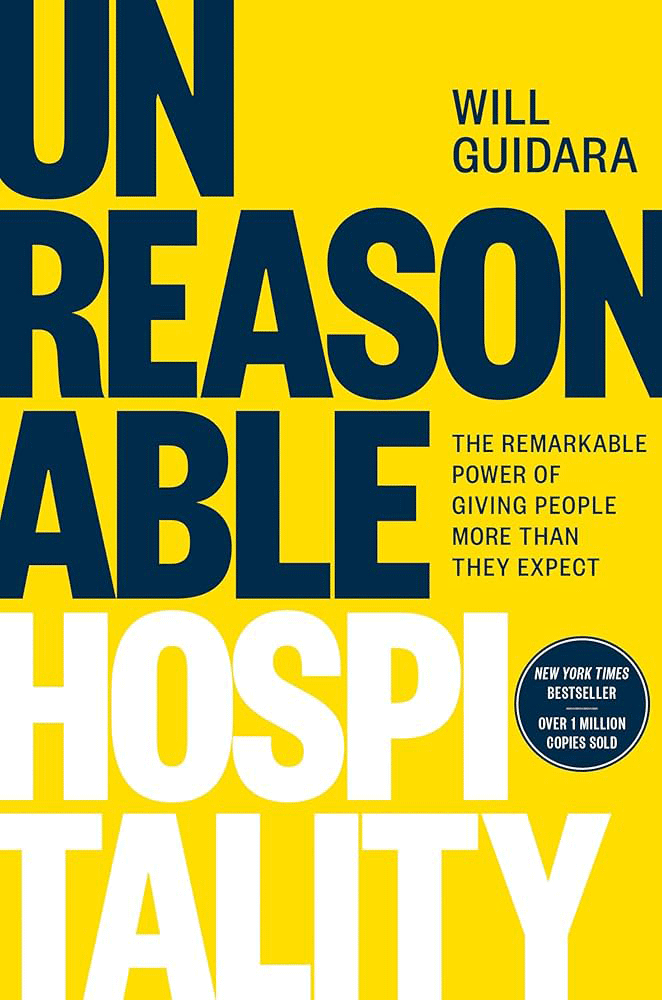
I have to admit: I have not yet read this book! (But I want to!)
In the last several months, I've experienced three things that have signified hospitality to me. They are:
A Raincoat
A Response
A Restaurant
A Raincoat
We recently had the awesome experience of attending Jazz Fest in New Orleans to celebrate the 50th birthday of my elementary school bestie with her husband and 8 more of their friends. This is a four-day experience, and for two of our days it was rainy. The second of which was extremely rainy, and Jazz Fest cancelled some performances and pushed up the headliners in the schedule.
Under a tent, I spied someone wearing a raincoat emblazoned with a Maya Angelou quote:
“The ache for home lives in all of us, the safe place where we can go as we are and not be questioned.”
This sentiment is exquisitely perfect when it adorns a garment that covers us and protects us, isn’t it?
The raincoat offers respite.
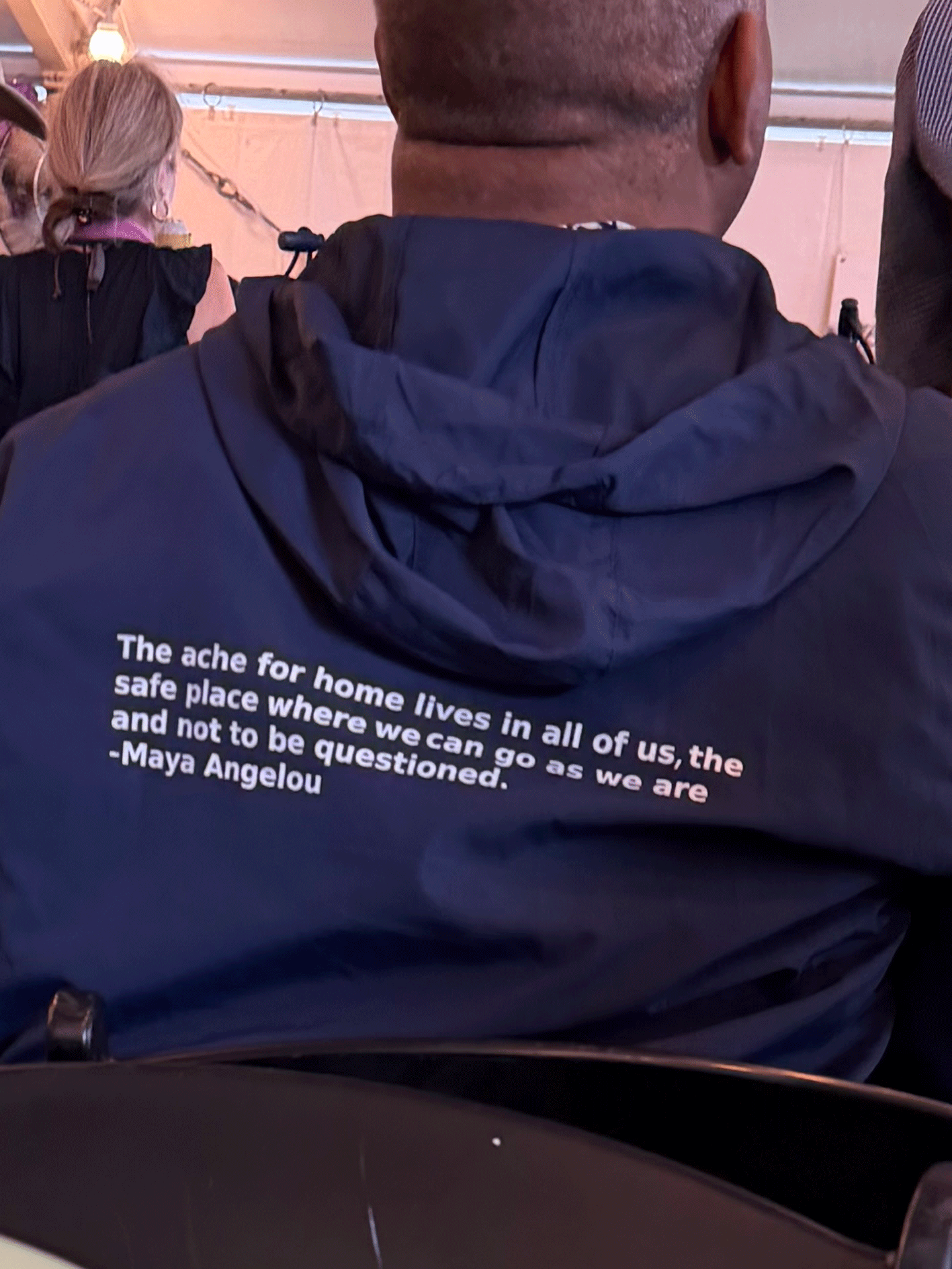
Where does one acquire a raincoat like this?! (I want one.)
A Response
Actual handwritten notes are hard to come by these days, aren’t they?
We received a lovely thank you note in the mail the other week, and it continues to bolster my spirits. Not only because it was unexpected, but because its contents reflected back to me something good about myself. I don’t mean in a self-serving, narcissistic way. Rather, in a way that gives someone a little boost to continue doing whatever it is they're being thanked for because someone else deems it to be good or helpful.
In late April, Matt and I hosted our third book-related party. The first year, I simply invited some people to come to our place for a social evening with one caveat: The “price of admission” was a book recommendation. The next April and then again this year, we hosted the same but added a “if you want to bring something to read aloud, please do!” clause. Not everyone wants to read something, but enough people do that it adds a really lovely twist to the evening, while still remaining casual and welcoming because many people do not know each other at these gatherings.
Someone who attended the most recent evening sent us a thank you note — a response, if you will. One thing the note said was “To be in such a lovely home, surrounded by friendly faces and beautiful words was a balm for the soul.”
The response offers a way for me to reflect on my role in this big ol' world. (And provides the important reminder that hospitality can be “a balm for the soul.”)
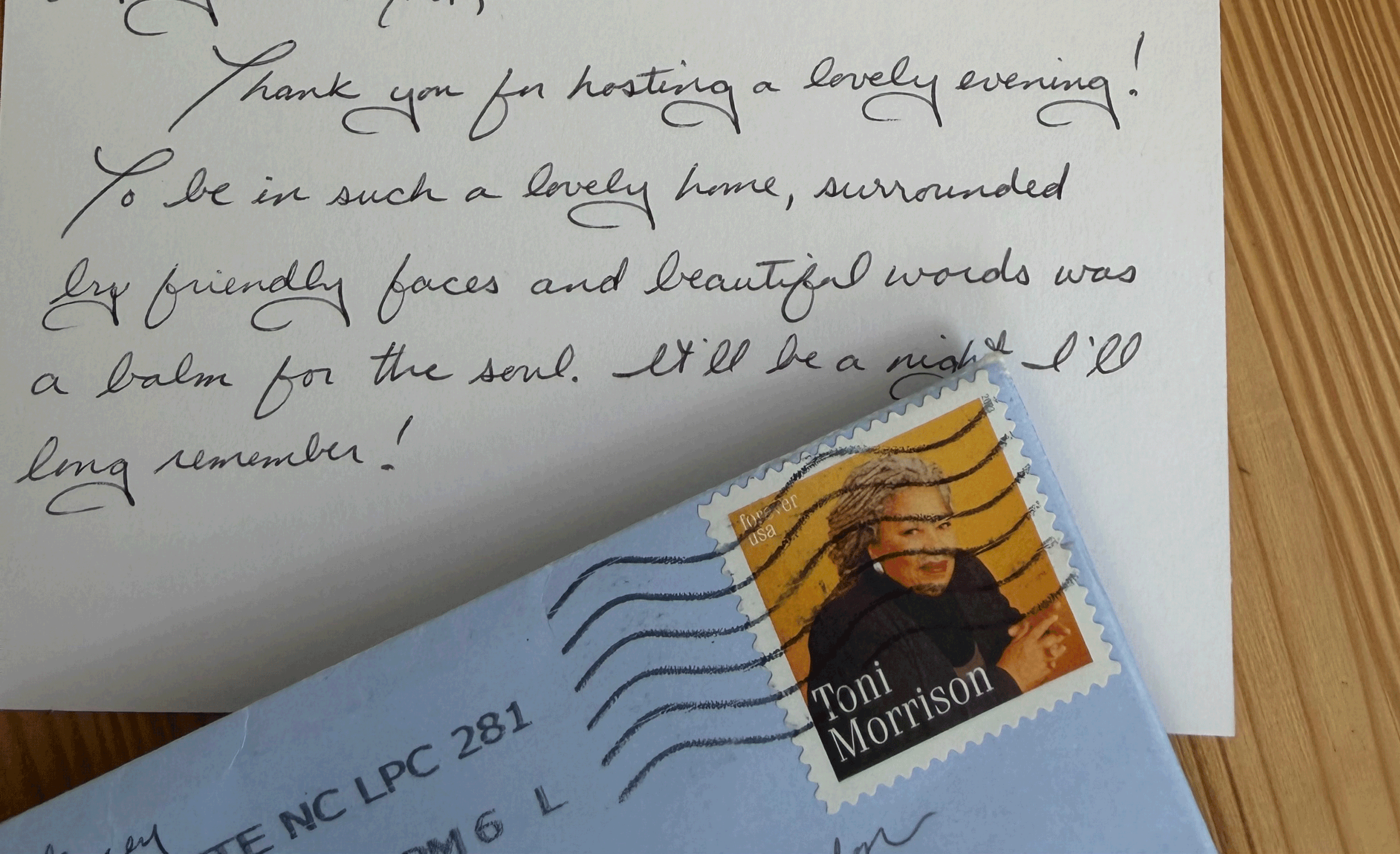
Love that Toni Morrison stamp! (I have actually bought a book of these before as well.)
A Restaurant
For our 25th anniversary, Matt and I booked a reservation at Canlis, a Seattle restaurant that Food & Wine recently ranked as the Number 2 restaurant in the US. It was such an experience, from the food, to the very cool mid-century building, to the setting overlooking Lake Union (never did I think I would enjoy being a sit-side-by-side couple, but it totally worked in this context), to the service. While I had never eaten at Canlis until that evening, some appropriated version of nostalgia hit me hard; it is a Seattle institution for sure.
Interestingly, there’s a bit of a Canlis/Guidara connection because the two brothers who comprise the third generation to oversee the family restaurant (grandsons of the founder) went to Cornell’s renowned Hospitality school with Guidara, and one of the brothers has recently moved to Nashville to work on a new initiative with him.
A letter-pressed postcard that Canlis tucks in its menus now has a perch on the window in my office. The fact that I actually have one of these beauties in my possession is itself the result of an act of hospitality because, well…I originally left my card in the bathroom as we were leaving. (I’m a bit ashamed to admit that it was inadvertently left behind because I was really liking my look that night and was therefore busy taking a selfie in the mirror before we left ... an extremely un-Amy move.) I sent an email to Canlis when I got back to Charlotte and within a week or so, an envelope holding two of the postcards landed in our mailbox.
The restaurant offered rejuvenation. (And the postcard continues to offer a reminder!)
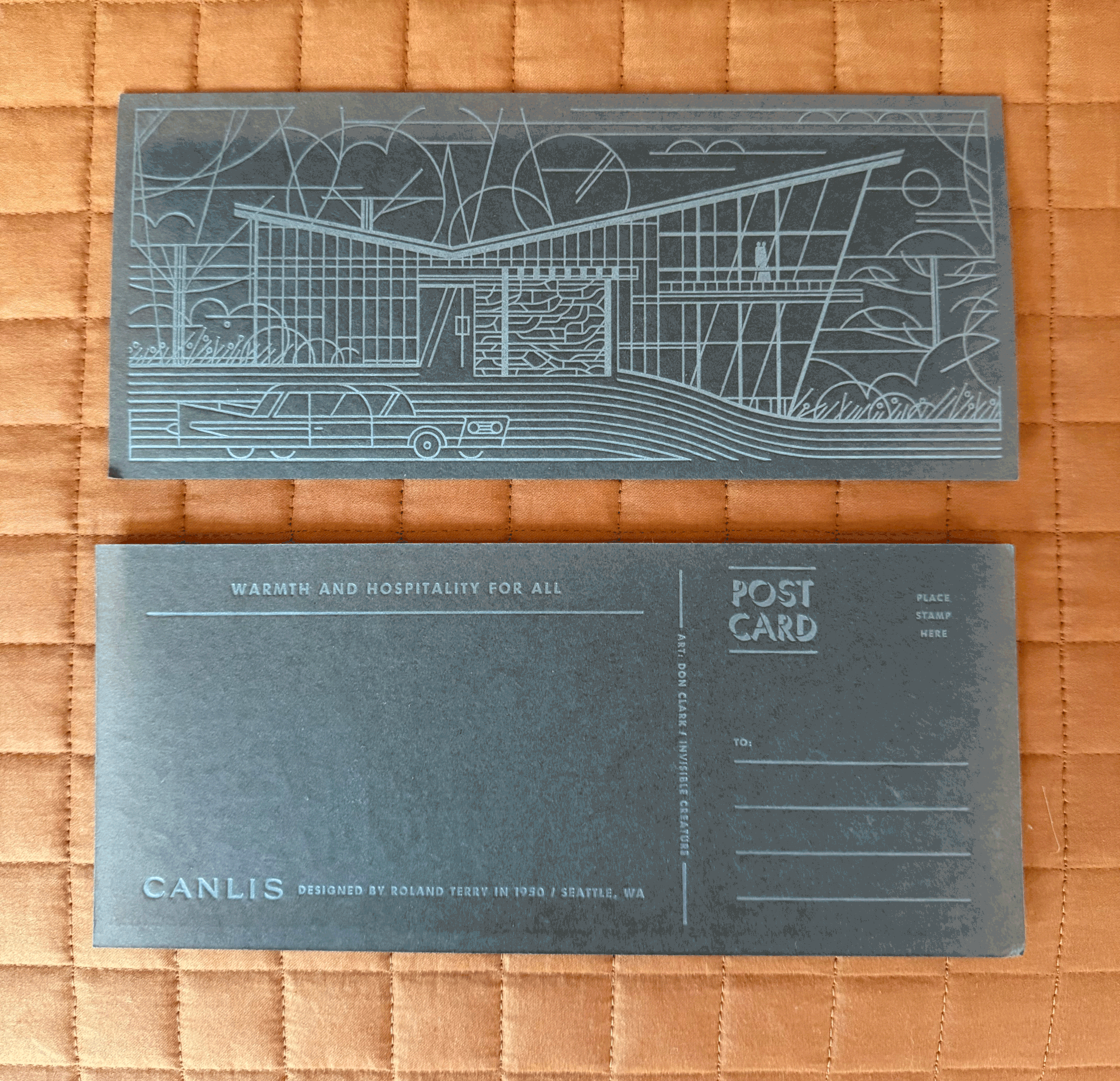
The original Canlis structure was designed by Seattle architect Roland Terry in 1950, but an architect named Jim Cutler was behind a big refresh in the 90s. (Our own architect cited Cutler's work as potential inspo for us when we were renovating our house, so all of this felt very prescient and full circle!) Note that the back (the bottom card) has "Warmth and Hospitality for All" printed at the top.
‘Hospes': Host + Guest
Sometimes I think about whether or not a book is hospitable. For me, the perfect book is one that offers me respite, reflection (a book that encourages a reflective mindset as well as a book that reflects back my ideals or life in some fashion), and rejuvenation.
I’m still not done sharing my 50 Book Recommendations (almost there!), but this one about Plainsong I posted recently is what made me think about the hospitality of books. I’ve obviously read this book, but when I pulled it off my shelf to thumb through it again, I was particularly struck by this cover blurb: “So foursquare, so delicate and lovely…it has the power to exalt the reader.” Of course, not everyone is going to like all the same books, but if something possesses the ability to “exalt,” that sounds a bit like what Guidara is going for.
So, what, actually, does it mean for a book to be hospitable?
All the snapshots I shared above (raincoat, response, restaurant) are things that I’ve tied into my own experiences — into something, somehow, familiar to me. No doubt, an exercise like this can start veering into something too ego-centric: How can I make something — everything! — relate to me?! But I think this is what humans often do; it’s how we attempt to unfurl a jumbled knot of ribbons and strands into some sort of streamer pointing us forward.
The Latin word hospes (from which our word “hospitality” is derived) means both “host” and “guest.” There is a symbiotic relationship between a person (or book, as may be the case) who gives and a person (reader!) who receives. When that magic happens to us with a book — when an author’s creation reaches a reader and allows him or her respite, reflection, and rejuvenation — that's a special kind of kismet.
A book like this will probably surprise us with its force and delight … because usually the best books sneak up on us unexpectedly. As you read and continually hunt for "good books," I’d encourage you to keep the subtitle of Guidara’s book Unreasonable Hospitality in mind too. Let’s expect a lot from the books we read, and let’s expect a lot from authors to deliver. In turn, let’s expect a lot from ourselves, as readers, too! Hospitality is a two-way street, and if we’re not primed to receive good literature (i.e. we spend 100% of our reading time with the intent of escapism instead of seeking out exaltation once in a while), I think we’re missing out on whatever a book equivalent would be a of a raincoat, a response, and a restaurant.

You are welcome to curl up with a good book (and the sweetest dog) at our house!
Latest Reads
Here's a quick roundup of books I've read since the last newsletter. Feel free to screenshot or save the graphic to keep handy next time you're looking for something to read. You can click through the links below to read more.
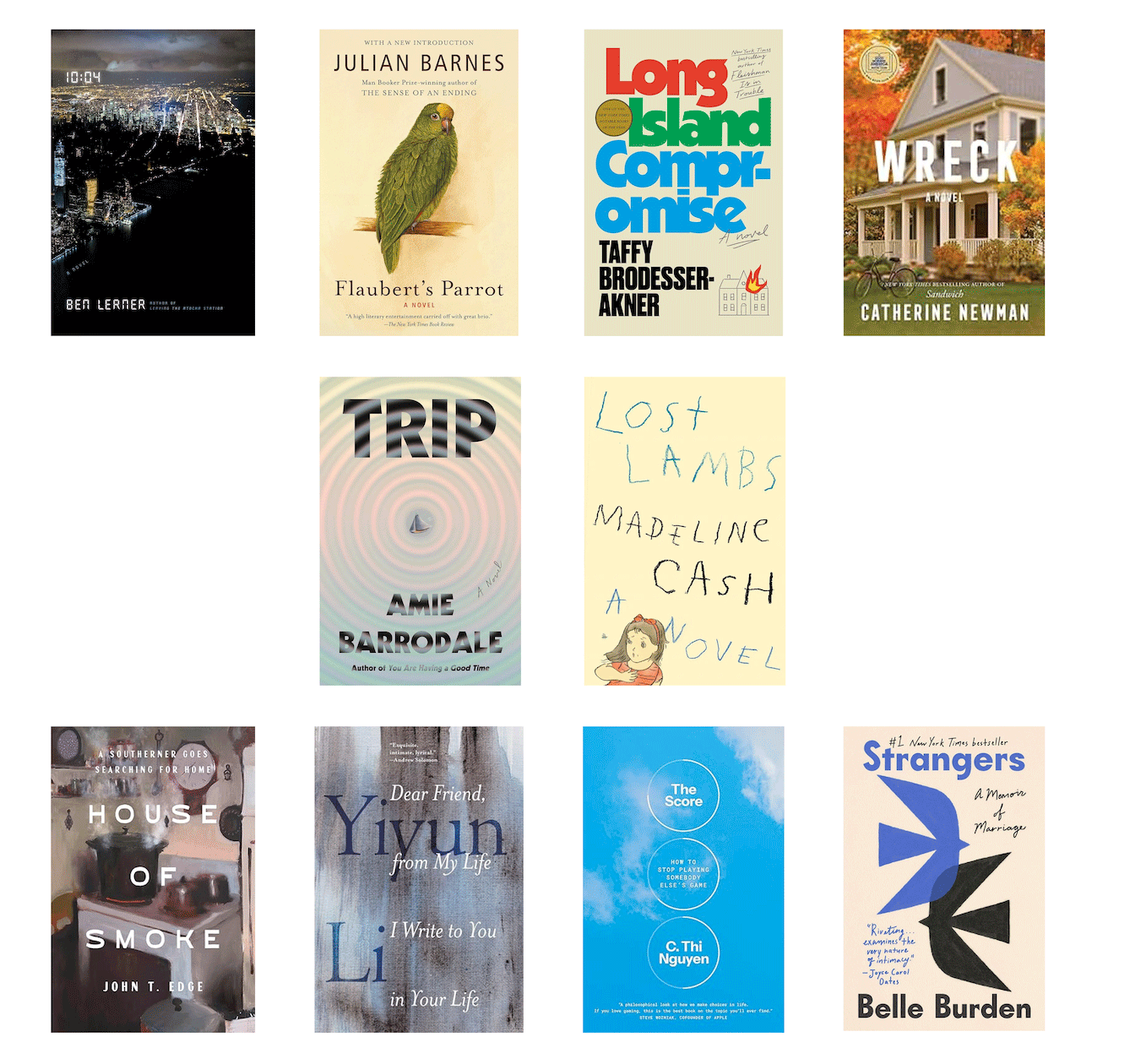
10:04 by Ben Lerner
Flaubert's Parrot by Julian Barnes
Long Island Compromise by Taffy Brodesser-Akner
Wreck by Catherine Newman
House of Smoke: A Southerner Goes Searching for Home by John T. Edge
Lost Lambs by Madeline Cash
Trip by Amie Barrodale
Dear Friend, from My Life I Write to You in Your Life by Yiyun Li
The Score: How to Stop Playing Somebody Else's Game by C. Thi Nguyen
Strangers: A Memoir of Marriage by Belle Burden
Read This!
(i.e. some quick links)
< "Can 'Bookstreaming' Save the Literacy Crisis?" Never did I ever think I'd be sharing something from Cosmopolitan here. But here I am! I do not profess to know anything about the streaming platform Twitch, but one of its superstars recently decided to abandon his former content strategy (which included a month-long livestream of...his life? [I really don't know!]), citing mental health concerns. Kai Cenat stepped away from whatever it is that extremely internet-famous people do on Twitch (his content included partnerships with Nike) to stream himself reading aloud! This is actually a pretty fascinating, short read. (Thanks, Cosmo?!)
< "How Reading Picture Books to My Babies Helped Me Process My Day." I related to this NYT piece! (Although it's been many, many years since I read picture books to my babies...)
< "How Reading With My Dying Mother Revealed Her Life." Here's a poignant weekend essay from The New Yorker. "All the feels," as they say...
Am Reading
Want to get these dispatches straight to you inbox? (Just click that button below!)