
#HomeyVibes (in other words: All About Candles)
The following essay is a draft of an excerpt from my working manuscript.
My mom is half Norwegian and half Swedish, and there are some branches of her family that embrace the Swedish component quite vigorously.
Growing up, we did not, but there was a part of me that ached for that assured sense of identity. But alas, not only did we mostly ignore Scandinavian holiday traditions, more to the point: I am not blonde. And so I had two strikes against me when it came to Santa Lucia. Even if our small unit had decided to partake in the Santa Lucia tradition, I wouldn’t have fit the mold. Ergo, I never would have been crowned with burning flames regardless.
Santa Lucia Day (or the Feast of Saint Lucy) is celebrated on December 13 (also Taylor Swift’s birthday: coincidence?!), and its most notable visual marker is a girl in a white robe with a crown of candles. You know you’ve seen it at the very least in IKEA advertising.
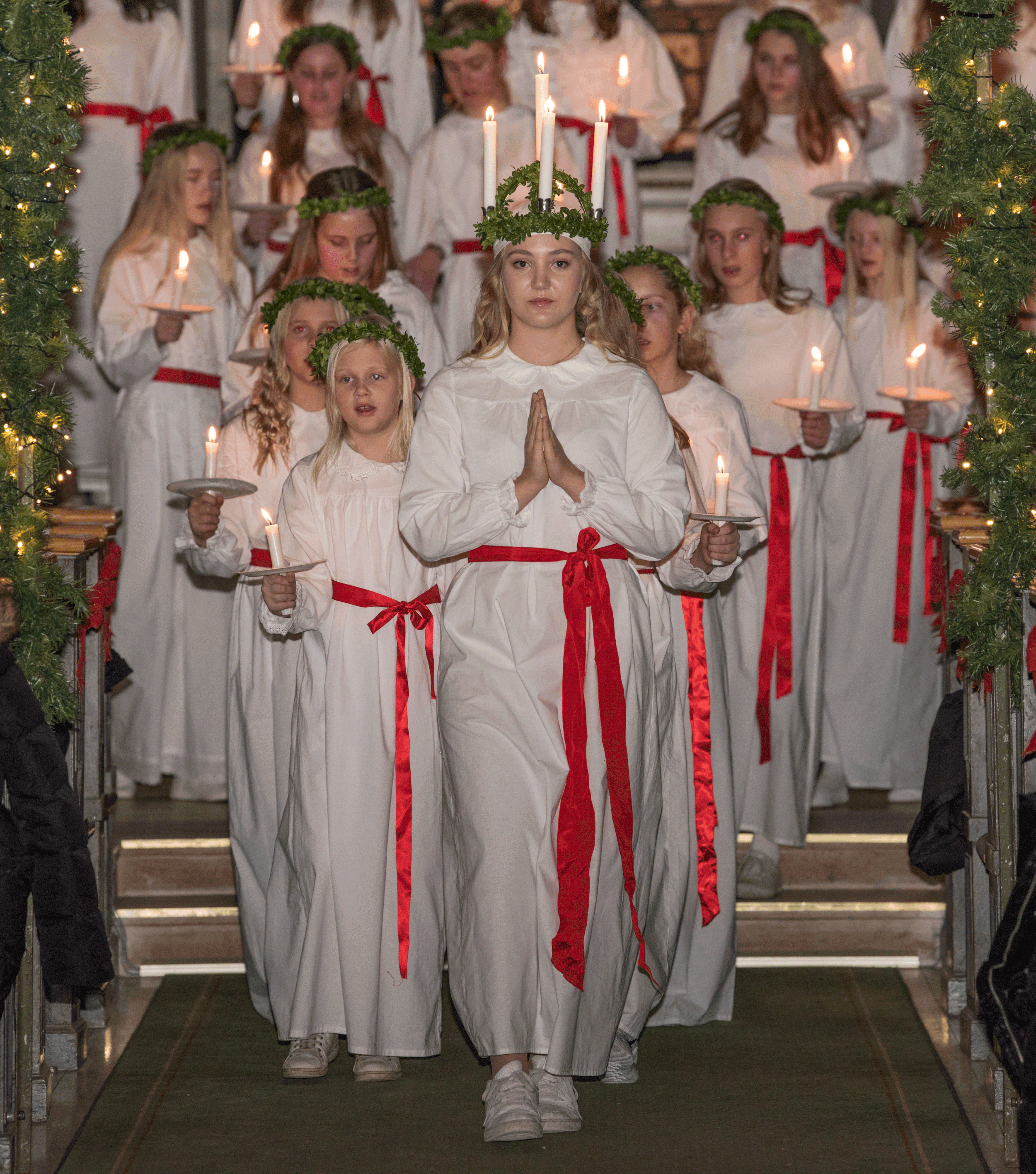
Here’s the short version of the story:
In the 4th century, the martyr Lucia of Syracuse was the bearer of food to Christians hiding in the Roman catacombs. The candlelit wreath on her head led the way; her hands remained unencumbered in order for her to carry as much food to these people as possible. An enduring symbol becomes aspirational.
The long story goes like this:
Lucia was born in 283 AD to a Roman father and a (possibly) Greek mother, Eutychia. The family existed in the upper echelons of society, yet when Lucy’s father died, she made a vow to God and remained a virgin while giving her dowry away — unbeknownst to her mother who had already arranged a marriage of her daughter to the son of a wealthy pagan family. Because Eutychia was ill with a bleeding disorder, she therefore felt compelled to arrange to have this “protection” for her only daughter. So when Eutychia went to the shrine of Saint Agatha at Catania in search of a cure, the martyred saint appeared to Lucia in a dream and informed her that not only would she be cured, but that Lucia would become to Syracuse what Agatha was to Catania: Her daughter would become a saint. And that did come to pass because Lucy then insisted that she give her wealth away. The man to whom she was betrothed got word of this and ordered her to burn a sacrifice to the emperor’s image. When Lucia refused, she was ordered to go be “defiled in a brothel.” She would not die until, at last, a sword was thrust in her throat. So, as all stories of martyred saints go, a violent end transforms into a fable-like story. Lucia was martyred and venerated by the 6th century.
If You Know, You Know: These Santa Lucia-adjacent Swedish angel chimes were iconic to my child self, and I now have a set for my own home.
In Sweden (and other Scandinavian countries), it is a privilege to be “crowned” Santa Lucia in one’s community. Instead of candles leading the way with open palms, the (now) electric lights represent something hopeful during long and dark winters. In modern-day Sweden, a candlelit procession is held on December 13 with girls adorned in white gowns and red sashes to represent martyrdom. There is one Santa Lucia and the rest are her handmaidens — there are also Star Boys who carry sticks with stars at the end of them. From what I understand, competitions — both nationally as well as locally — used to be held to “win” this honor, but now places (such as schools) have become embraced a more egalitarian stance by bestowing the honor via lottery. (So maybe I’d have a shot now.)
***
The first recorded “Lucia” in Sweden was in 1764, but the 1900s is when this tradition really took off in Sweden. Between my extended family and their affiliation with a historically Swedish-American church denomination and then a Swedish teacher at my high school who shared Santa Lucia with the school community, I felt inundated by a culture that wasn’t really mine, yet it felt familiar the way the smell of chocolate chip cookies baking feels familiar.
***
But the symbolism of light — of a candle — certainly isn’t unique to Sweden.
Legend has it that the Irish started the tradition of putting a candle in their window as a sign that Catholic priests were welcome to come in to their home despite the politicized nature of faith. Or legend has it that candles in windows were a sign of grieving the loss of someone and that that person was still thought of and remembered in that home. The legend of light lives large. From “This Little Light of Mine” to the phrase “a light on a hill,” a candle connotes a welcoming hope, a beacon, a comforter. Which is how we like to feel when we’re at home, yes? This sensory experience of light — and warmth, perhaps — is a visual cue for us.
But what happens when other senses are involved?
In 1974, the now-ubiquitous Yankee Candle Company recognized that certain smells amp up the homey vibe and marketed its first scented candle. According to company lore, “early favorite fragrances” included Bayberry, Cinnamon, Cranberry, Pine, and French Vanilla. These are scents that we typically associate with “coziness.”
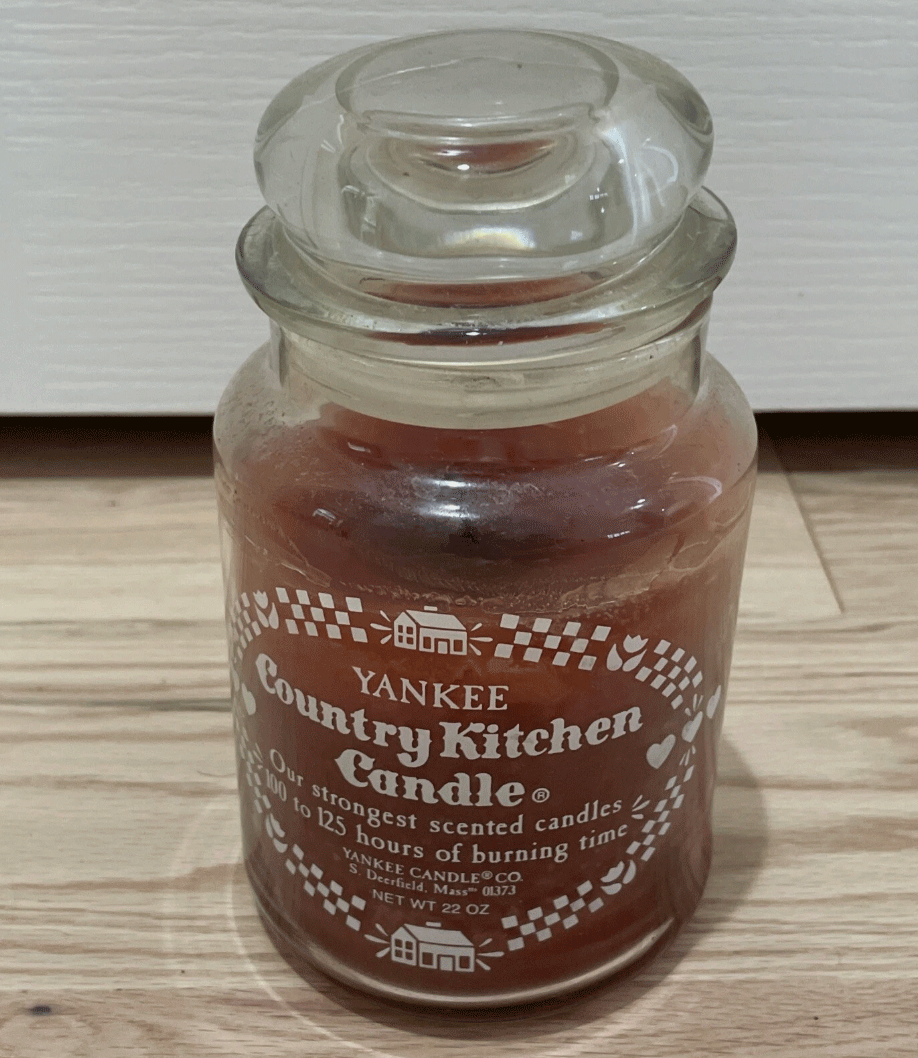
Old school! This one’s from an eBay listing which reads, “Vintage Yankee Kitchen 22 oz. Candle Old Label Used. Smells cinnamony?”
And then — more than 40 years later — a company called Homesick put a next-level spin on the concept. “Founded in 2016, Homesick is a home fragrance and lifestyle brand with one simple goal: to bring joy to your home by helping you feel closer to the people, places and moments that matter most.” We often talk about “bottling something up,” whether that be a memory, a feeling, or an experience. It turns out that you can — and Homesick is marketing it to you as a scented candle.
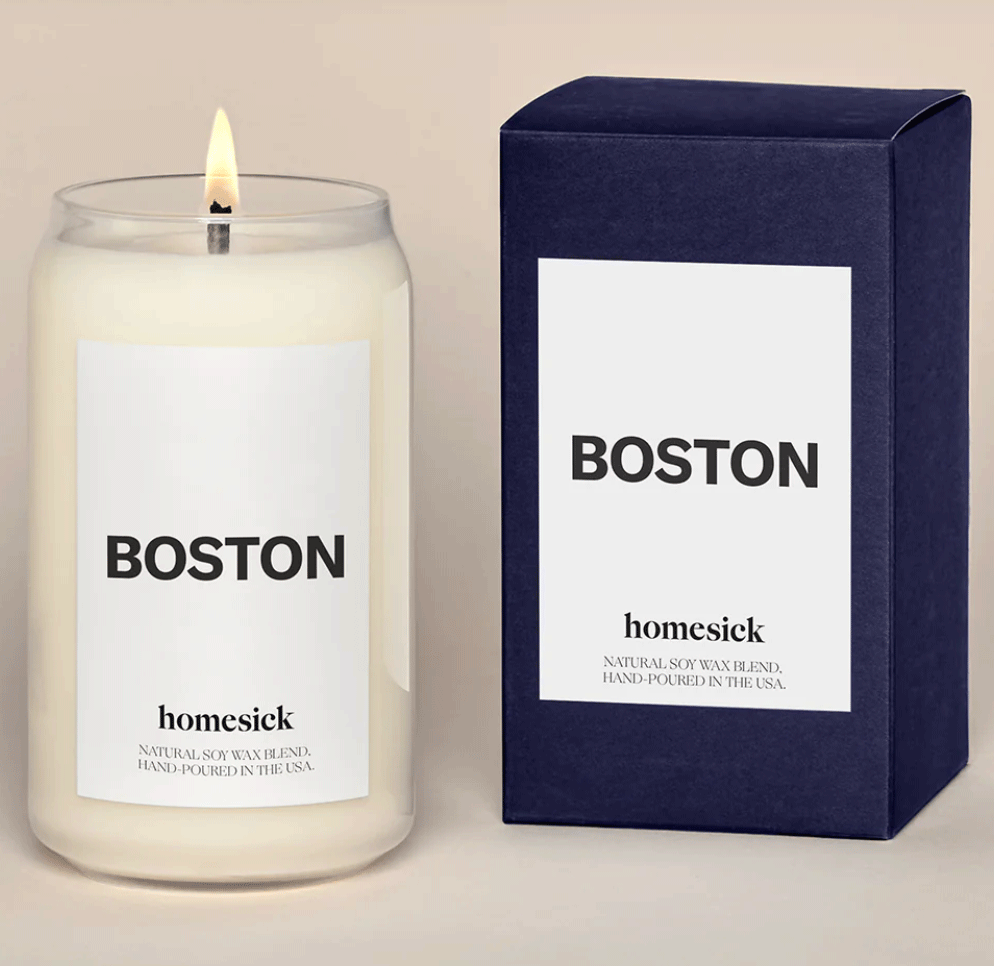
Unlike Yankee Candle (and its incessant copycats), Homesick isn’t simply replicating something that already is a scent. It is replicating a place via its scent. The company’s bestsellers include:
New York City (which is meant to conjure “the distinctive scents of spring days in Central Park, fine department stores, and concrete capture the energy of the greatest city on earth.”)
Hawaii (which is not too surprising given the fact that even if one has never set foot in the 50th state, we’ve been acculturated to long for the scent of “Juicy pineapple and coconut combine with sandy shore breezes, ocean tides, cyclamen flowers, and just a hint of sugar cane.”)
But once you start poking around Homesick’s collection outside of bestsellers, a whole world quite literally opens up to you. The company has somehow found soy wax approximations of India, China, Austin, Long Island, Las Vegas (“desert sand and midnight air, herbs and spices from the finest restaurants, and hints of cold hard cash”!), and all 50 American states. (What does Indiana smell like? “Selvedge denim, fresh picked corn, and newly harvested hay.”)
Even now, in 2026, the company’s “blog” is perfectly primed to driving internet traffic its way (recent posts are titled “What Does Bourbon Smell Like?” and “40 Best Unisex Gift Ideas That Everyone Will Love”) and its offerings include so much more than the initial place-based scents: Pilates Princess, Seinfeld: A Candle That Smells Like Nothing, and an entire Harry Potter collection. I’m not sure what some of these even smell like, but Homesick has got the game down pat.
Are our memories always commodified?
But in January 2021, The Guardian got it right with this article. “Light of my life: Why do candles feel so important now?” Followed with the subhed, “Buying a nice candle is a small comfort at a time when days blend into each other, stringing themselves together to form one huge, interminable bummer.”
Our Covid Era is over, but I still wonder if having the natural sensory experiences of a place bottled up and commodified “one huge, interminable bummer” too? Or is it actually just a nice, homespun benefit (SEO!) of gladly inserting yourself in a legend like Santa Lucia?