

READ ALL ABOUT IT
Since 2012, I’ve been writing about books. And the act of reading. And the importance of story and narrative. But, mostly, the underlying theme of all I write is how taking a moment to stop and digest some longform text — instead of scrolling, instead of watching a video, instead of multitasking — can be one of the most grounding things we can do for ourselves. Here’s the one-stop online home for all this writing.
You can read more about me and my work by moseying over here. Want to peruse periodic “essay drops” — excerpts from my work-in-progress essay collection about Homesickness? Here ya go.

In the Dream House
Memoirs: I typically don’t read them, but I just finished one. Introducing…In the Dream House by Carmen Maria Machado. (Introduction probably not needed for many of you bibliophiles.)

Labrador
When my brother and I have been back in our hometown together – which has happened, oh, maybe twice since our parents moved in 1995 – we say “This/that is so…weird” over and over. Which is, well, weird because there is nothing “weird” about where we’re from. (In fact, it’s kind of amazing!) What we are trying to articulate – albeit very poorly – is that nostalgia is a strange bugger. How does one make sense of one’s childhood memories? Not the concrete ones, but the “feelings” of: how your elementary school was or what it was like to take swim lessons. And the people, of course. Remember Mr. X? What about that family from Sweden who lived in the house across the street for 9 months? All those kids beaming from a class photo? You know how it goes. A stew of moments.
A Little More Human
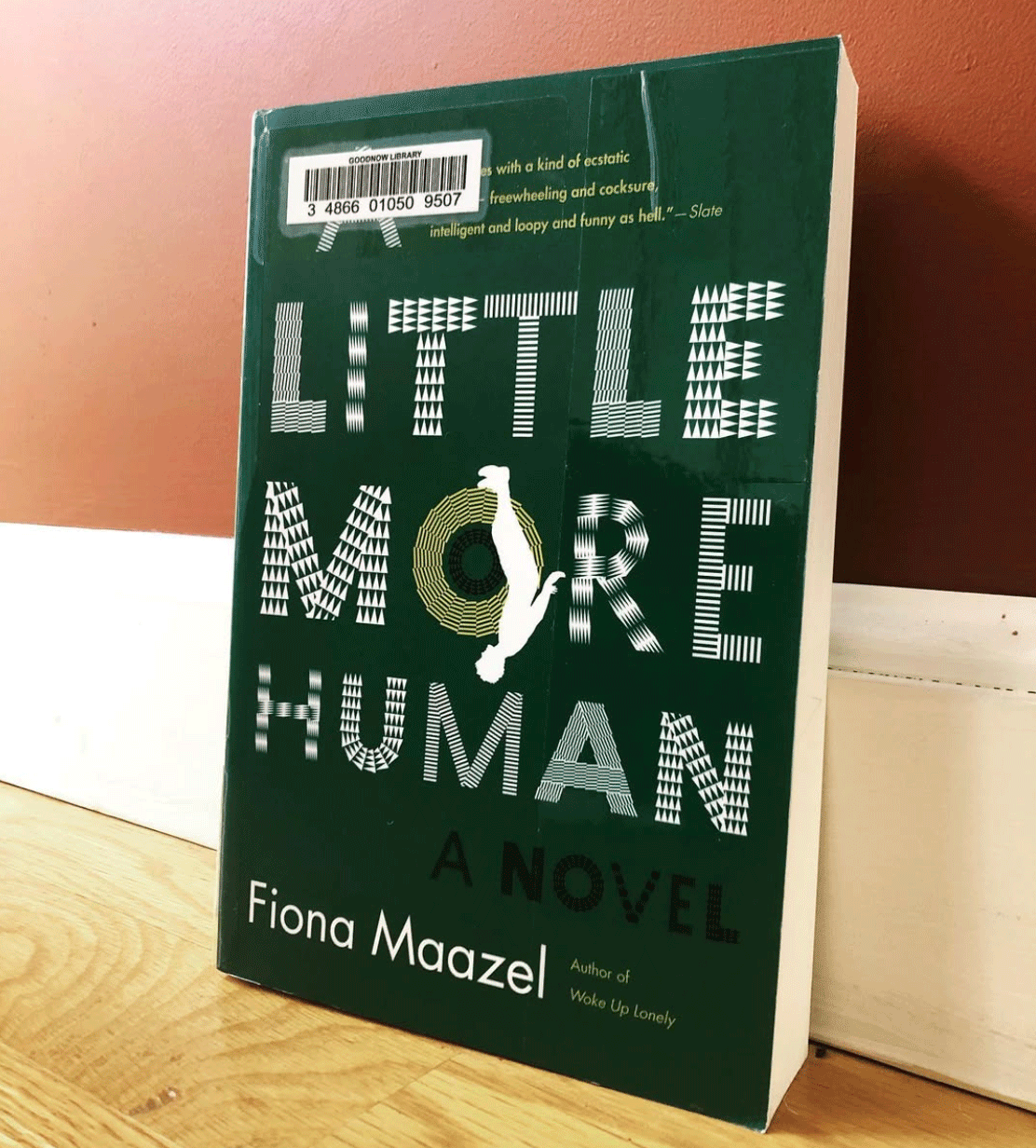
A long time ago, my husband worked with someone who introduced him to the book The Singularity is Near: When Humans Transcend Biology by Ray Kurzweil. At the time it felt wild (sort of like how Tom Cruise pawing at his invisible swipe screen in Minority Report seemed ca-razy), but now a novel like A Little More Human, by Fiona Maazel (and published in 2017), doesn’t seem all that far-fetched. This book is part literary fiction and part…speculative fiction?
RAWTS: We Chose The Overstory
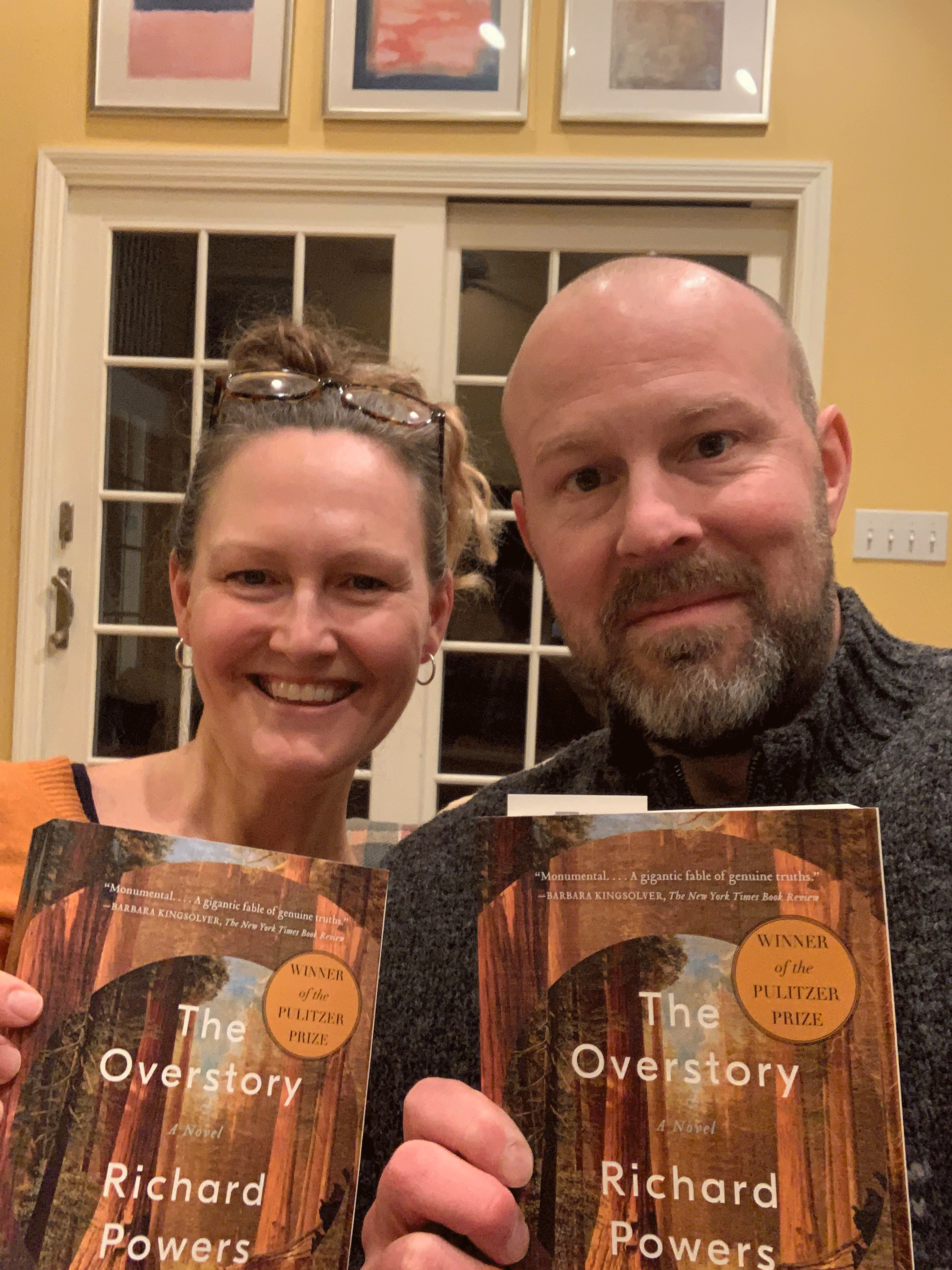
Awww, it’s His and Her copies of The Overstory. Thank you to those who played along with my husband Matt’s big “resolution” for 2021!

RAWTS: How It Began
Hi. I’m Amy’s husband, Matt. She says nice things about me here, but she rarely speaks of the dirty family secret: I don’t read.

Mirror, Shoulder, Signal
Mirror, Shoulder, Signal by Danish writer Dorthe Nors. File under: Scandinavian literature can needle human emotion in a spectacular fashion – probably because it does so in an almost-but-not-quite dull manner. (One of the best books I’ve ever read is The Faster I Walk, the Smaller I Am by Norwegian author Kjersti Skomsvold.) I checked out the (few) 1-star reviews of this book after finishing, and as I predicted, they declared it “slow” and “meandering.” Well, I guess I’m a one-star gal because that’s what makes the novel work.

A Children’s Bible
My experience with A Children’s Bible pretty much blew my mind. I spent about two-thirds of it hating it/being annoyed by self-absorbed parents willingly unaware of their elite privilege while they drink to oblivion, ignore their children, and swirl around the propped-up world they’ve created full of others like them. To their children, these adults are amorphous and interchangeable and “a cautionary tale.” One child totes around an illustrated children’s Bible which sets the allegorical tone of this novel. One’s not reading A Children’s Bible as a straight-up, literal text – the parents’ debauchery and the children’s ability to completely fend for themselves will give that away. (As will the natural disasters.) So I suppose this Pulitzer finalist tiptoes into “dystopian” territory, which is not really my kind of book.

To Be or Not To Be (Yourself): On The Vanishing Half, The Glass Hotel, and Shakespeare
In a moment of delusion in late 2018, I decided to commit to reading one Shakespeare play per month in 2019. And I mostly kept the goal. (The only one I didn’t finish was Much Ado About Nothing in December.) I had already read many of these in college, and even though I was wholly tired of the Bard by the time 2020 rolled around, the plays still felt fresh. I thought King Lear raw and relevant, Hamlet heartbreaking. Twelfth Night made me sad in a “Mean Girls” kind of way.
Want
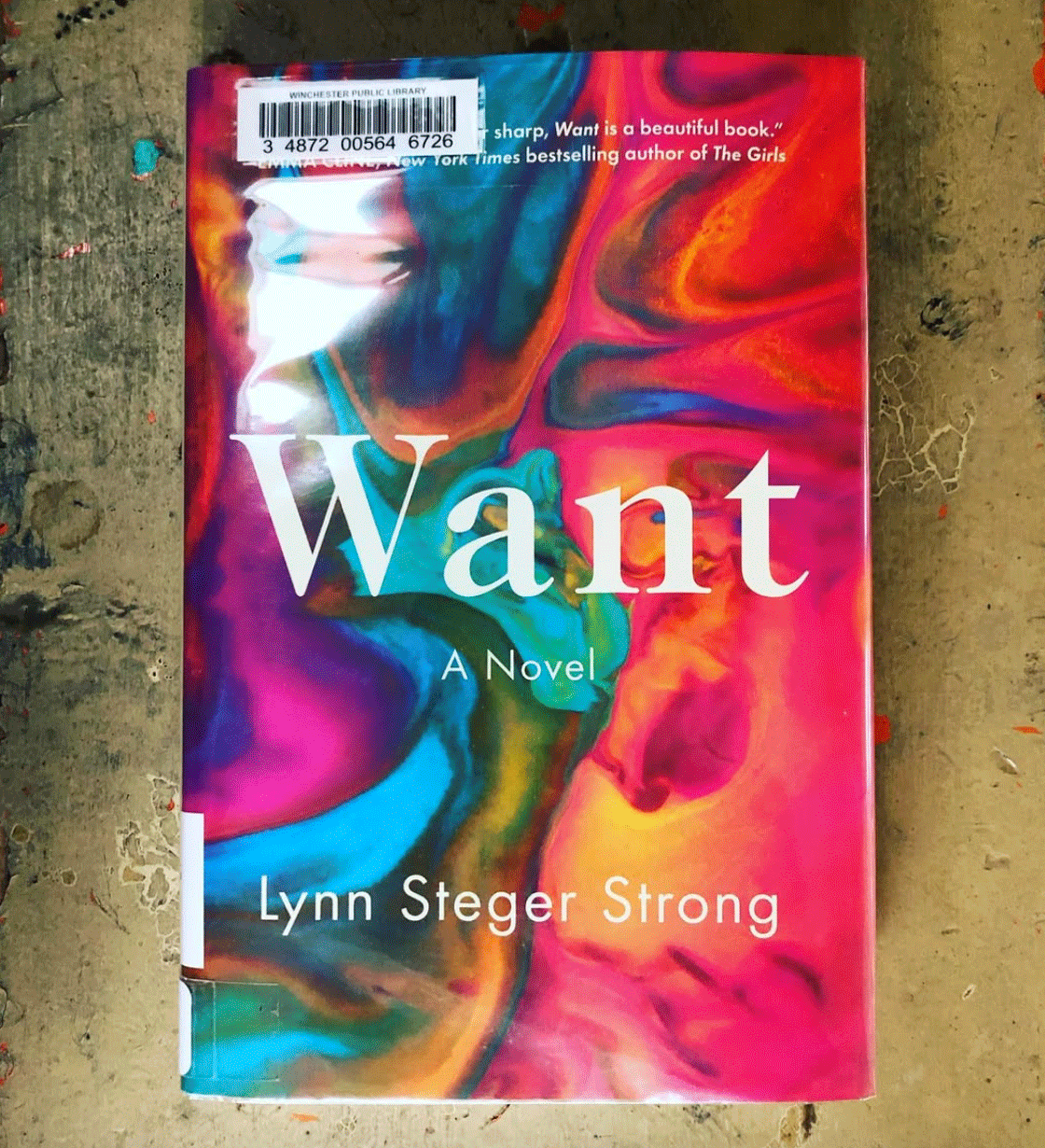
This year I tried to tussle with my “I don’t like it, but maybe I like it” stance toward “popular books.” (In fact, I’m currently writing a blog post about The Vanishing Half [very popular] and The Glass Hotel [normal, somewhat understated popular].) Want by Lynn Steger Strong – which, by the way, was named a top book of 2020 by NPR and was also included in The New Yorker’s ‘Best Books We Read in 2020’ [but does that mean it’s ‘popular’?] – provides an excellent framework for this loop-de-loop thinking.
Nothing to See Here
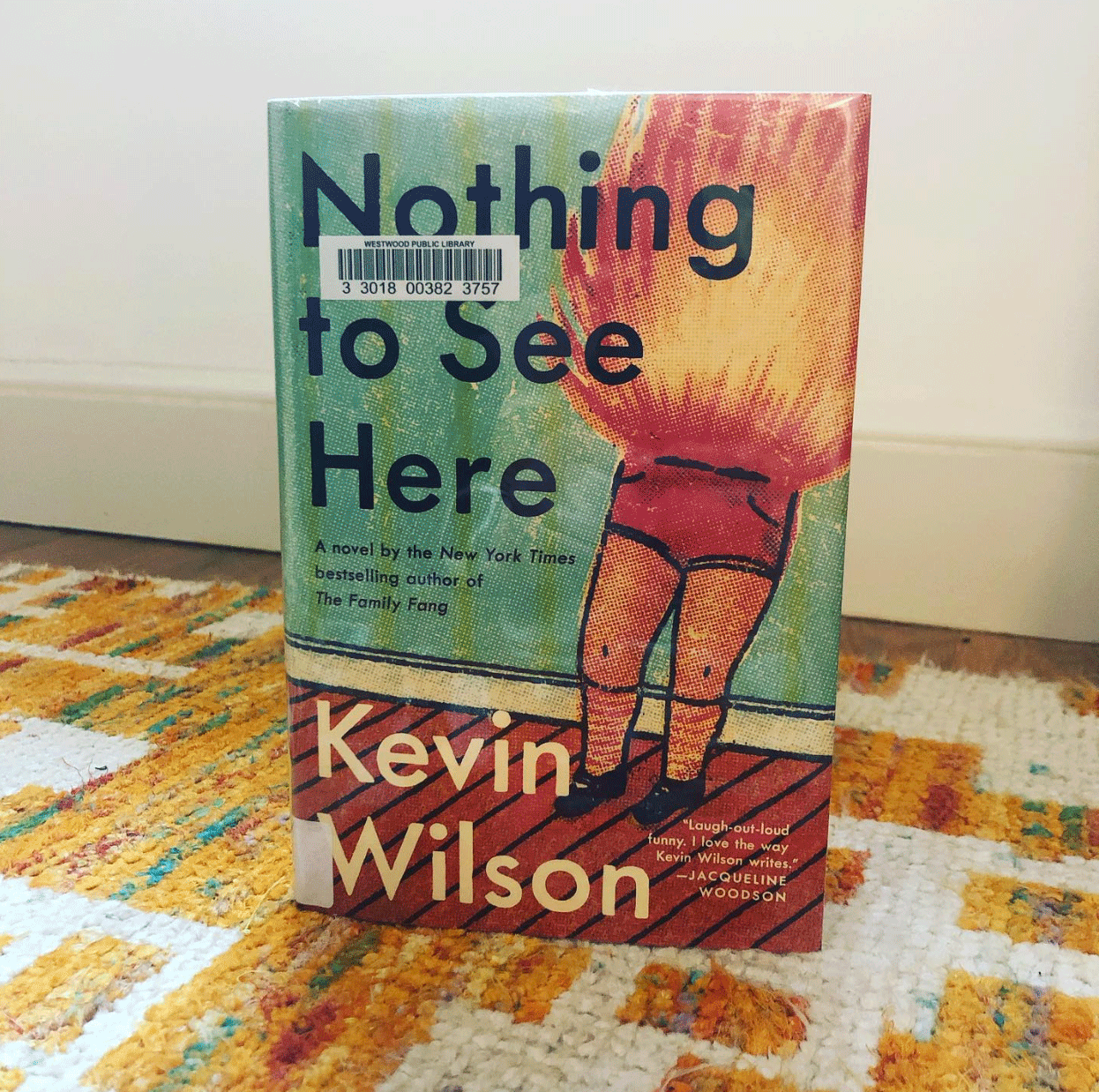
Here’s my recommendation for your next read-as-distraction. Nothing to See Here is funny, weird, and a little bit sardonic.

Sudbury exhibit looks for book-inspired 'mail art'
MetroWest Daily News
Mail art, a decades-old art form, is making a small comeback spurred by the pandemic, with one of the latest postal projects popping up in Sudbury.
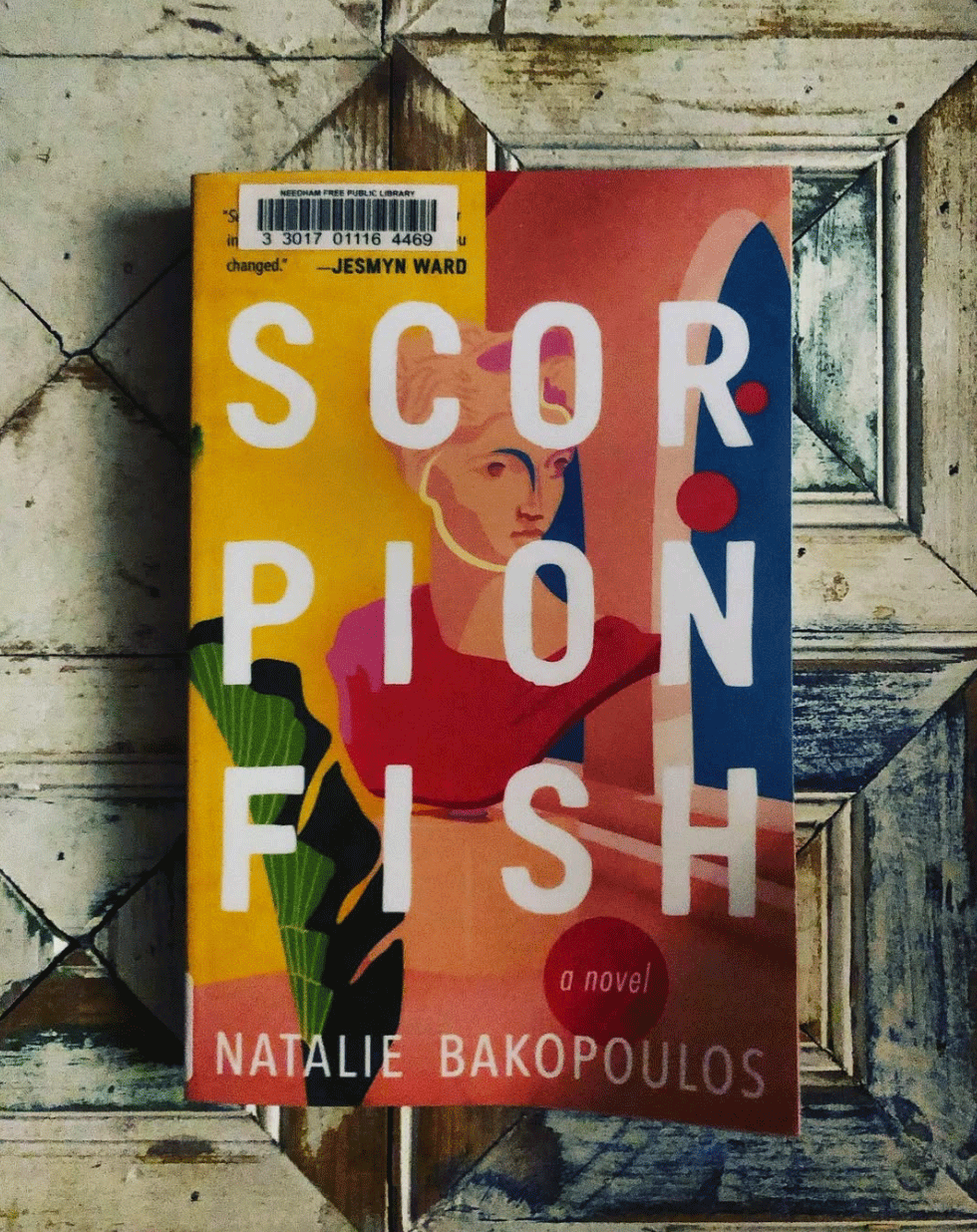
Scorpionfish
I’ll just cut to the chase: Scorpionfish by Natalie Bakopoulos is so, so good. Dear Reese and Jenna, THIS is a perfect book to add to your respective “book clubs.”
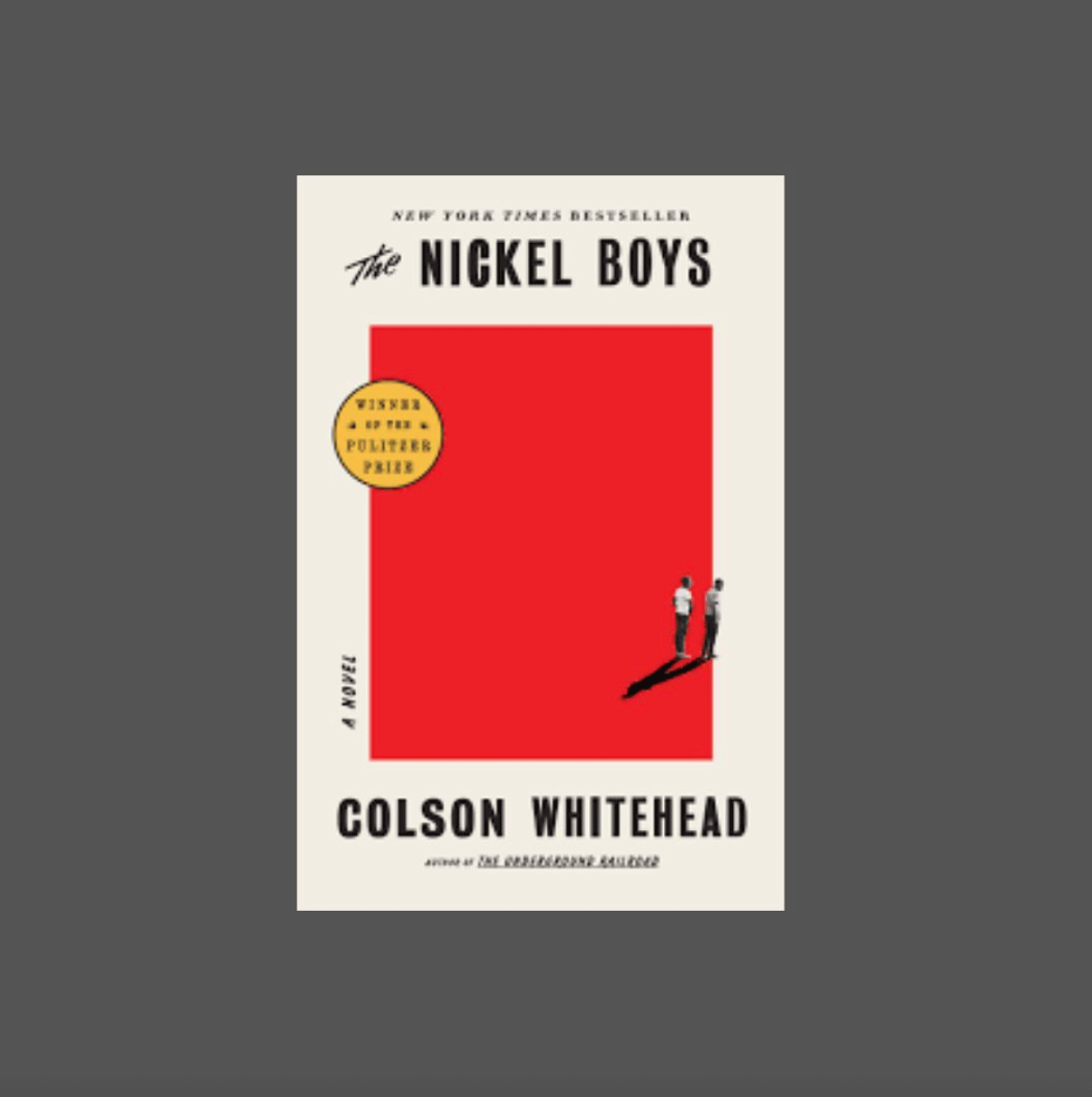
The Nickel Boys
Wow.
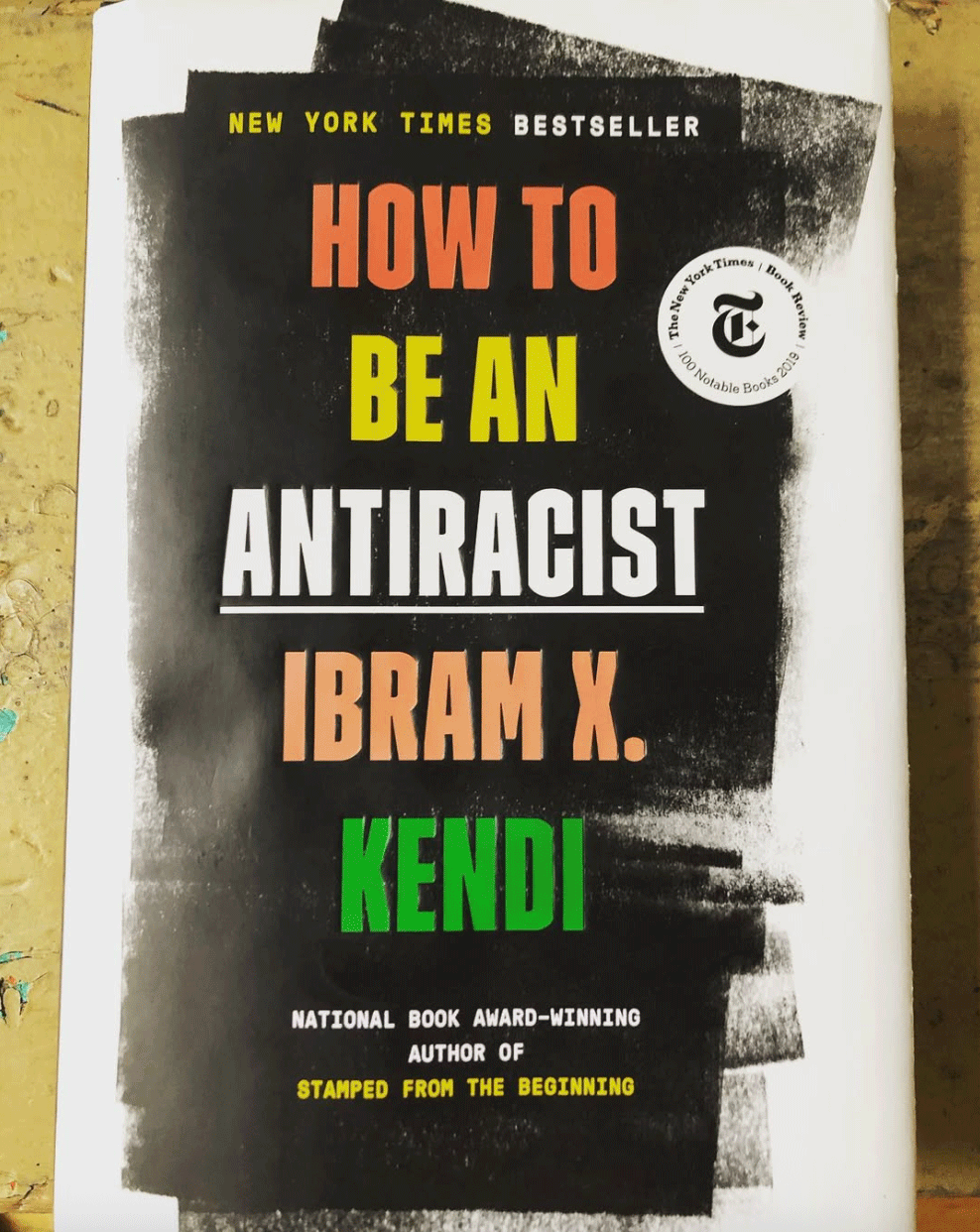
How to Be an Antiracist
Listen, there is *so much* info and analysis out there about Ibram X. Kendi’s book How to Be an Antiracist. There’s praise, there’s criticism…you can find (and then digest) that all for yourself. What I want to talk about, though, is how skilled Kendi is at presenting a new idea, albeit one that *seems* so subtle that you might think he’s merely parsing words.

Reading + Pandemic = Travel? On Amy and Isabelle, Beyond Babylon, and Being Well-Read & Well-Traveled
I’ve never really bought the “reading is like traveling” argument. Reading is reading, and travel is travel, and never the twain shall meet. (Reading an Elin Hilderbrand book is just as good as actually being on Nantucket? Girl, please.) On Instagram, I occasionally tussle with the idea of why we read – and inevitably, someone brings up “travel.” I’m not saying that is not their experience, but it has never been mine.

Reading the Room: The Role of Readers in our Literary Landscape
Literary Boston
Challenging what a “book event” might look like, published in Literary Boston (formerly known as Boston Book Blog), the hub of Boston’s literary community.
Read Here or at LiteraryBoston.com

The Mystery of Leadership: On Kingdomtide, The Secret Life of Bees, and Becoming a Curious Expert
If anyone can be a leader, are all leaders experts?
Crazy times, huh? When you don’t encounter as many people in day-to-day life as you used to, you tend to think a bit more. I’m generally more of a pensive person – happy to observe the intricacies and tendrils of life unfolding – but since about mid-March, this pensive side has gone into high gear. Well, in one sense. There is a lot more time to “think.”
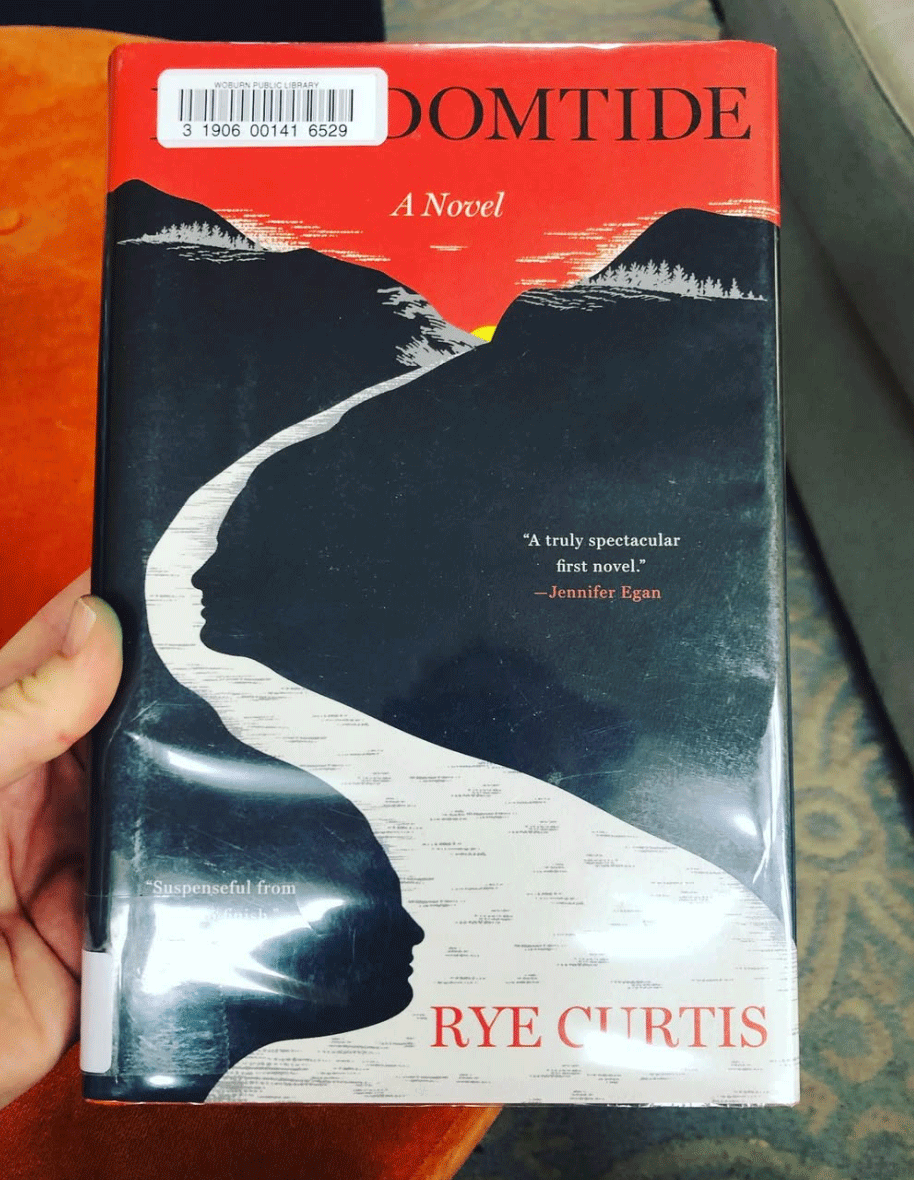
Kingdomtide
I’m just going to tell you: Kingdomtide by Rye Curtis is the book you need to read now. It just is. The premise: 72-year-old Cloris Waldrip is the sole survivor of a small plane crash. She survives approximately three months in the Bitterroot Mountains of Montana, while park ranger Debra Lewis simultaneously believes she is alive and (stubbornly?) continues her quest to find her. This is a story about resilience, loneliness, how we develop – and then maybe debunk – our belief systems, how little we may know ourselves, and how we make decisions...especially under pressure (either life-or-death pressure or societal pressure).

Just for Women! (?) On Olive, Again; Unless & "Domestic Fiction"
A couple of weeks ago, I was sitting in a Starbucks trying to get some work done when I overheard a man and woman talking about Little Women…presumably about the new film adaptation and its Oscar buzz. The woman was trying to explain “what” Little Women is – as in what it’s about – and was struggling a bit. “Well, it’s about four sisters…” To be fair, even if using the most straightforward way to describe the plot, it sounds a little homespun and maybe even boring: “Little Women follows four sisters as they grow up during the Civil War in the Transcendentalist hotbed Concord, Massachusetts.” And? So after the woman trailed off with the “four sisters” bit, the man replied, “But is it for men?”

Carol Shields Prize
Well isn’t this fitting for a #FridaysWithCarolShields.
