
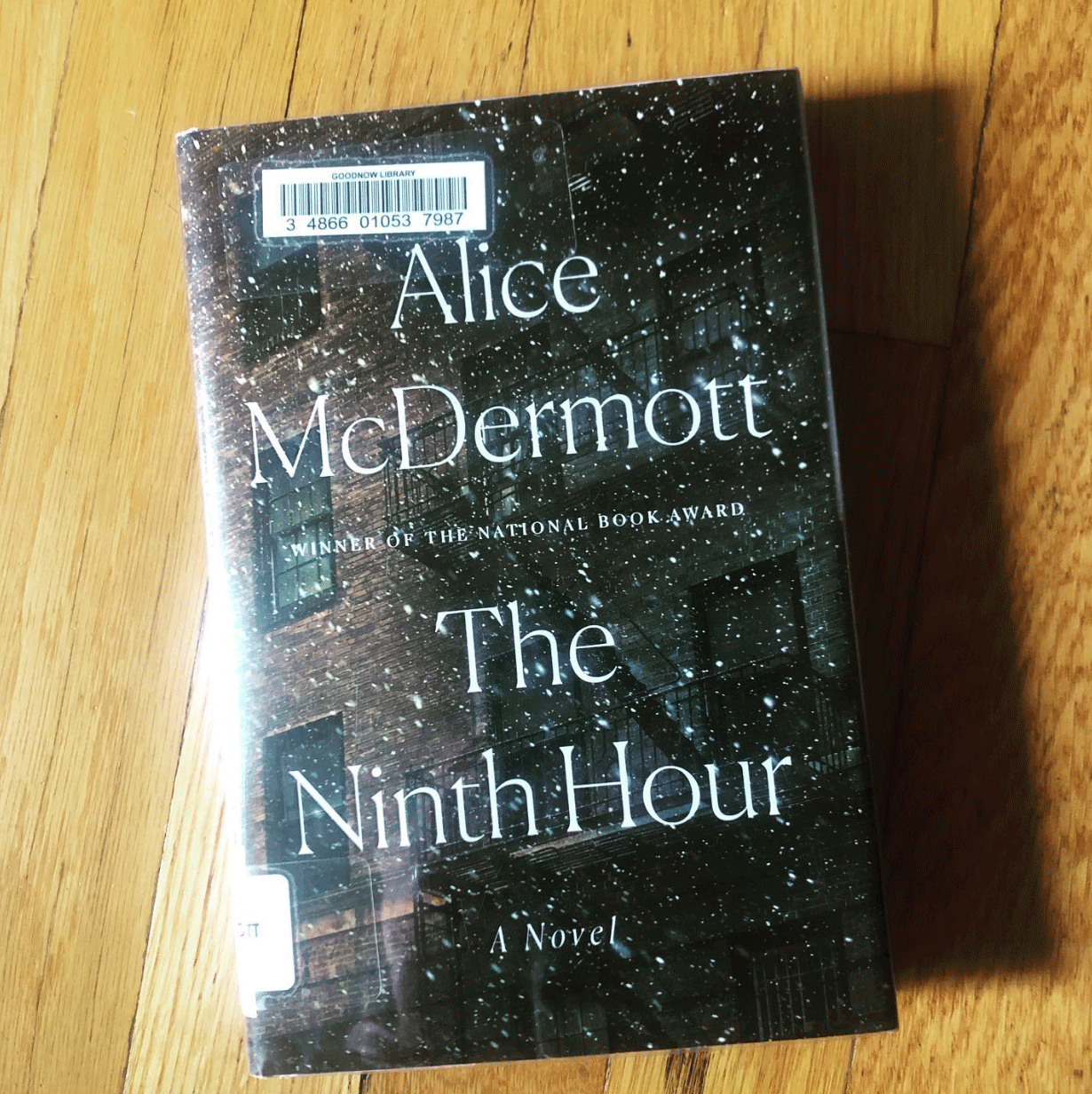
The Ninth Hour
I am often described as “so nice.” This is not meant as a weird humblebrag; I think it’s usually said when people don’t know me well. Or are surprised that someone isn’t a jerk? I suppose you could exchange “nice” for “polite” or even “sensitive.” Both are true to an extent…less so with “polite” if you heard me judge and snark away in the company of people close to me. But I think it’s more of a benign I’ll-take-the-high-road thing; if push comes to shove, I’ll forego my own comfort to make you comfortable. Sigh, why not? No skin off my nose, I guess. (Basically, I don’t care enough to be bothered by XYZ, so whatever.)
Now that I’ve thought way too much about this, I have to tell you that I’m not really a fan of this descriptor. Because I think far too often people see it as a badge of honor. (Oh and by the way, I also think there’s a lot to untangle here with how much adults often push hollow commands of “kindness” and “niceness” — at all costs — on children…just sayin’.)
“Nice” was on my mind as I read The Ninth Hour by Alice McDermott. It’s an engrossing intergenerational family saga set mostly in early-20th-century Brooklyn. At the center of the novel is a convent and its nuns who interact with different branches of families.
I feel like McDermott might be playing with the idea of “niceness” and to what degree being overly nice can hinder one’s chance at feeling fulfilled. (A: Let’s see how many times I can write “nice” in this post; B: Niceness has not hindered me from feeling fulfilled. For the record.) We’ve got nuns, who of course have pledged eternal “niceness.” (“But she had been raised to be polite. She had been trained by nuns to offer kindness to every stranger.”) We’ve got characters who run to various vices and then try to cloak them. (Gotta be nice!). And then we have people — namely Sally, the daughter of a woman engaged in “not-nice” behavior and a man who dies by suicide — who must push the limits of their own niceness in order to truly experience life. In fact, it’s a nun who tells her “Don’t think you can end all suffering with your charms.”
Is niceness all that it’s cracked up to be? Discuss.
originally published on instagram