

READ ALL ABOUT IT
Since 2012, I’ve been writing about books. And the act of reading. And the importance of story and narrative. But, mostly, the underlying theme of all I write is how taking a moment to stop and digest some longform text — instead of scrolling, instead of watching a video, instead of multitasking — can be one of the most grounding things we can do for ourselves. Here’s the one-stop online home for all this writing.
You can read more about me and my work by moseying over here. Want to peruse periodic “essay drops” — excerpts from my work-in-progress essay collection about Homesickness? Here ya go.

At the Bottom of the River
I cannot stand winter in the Northeast US. I don’t mind the cold (rather like it, actually), don’t mind the snow (love, it actually), it’s not like I have seasonal affective disorder and need to move to Florida (no) or get a special lamp. Rather, I just really, really dislike the grey-ness and I really, really, really dislike the barren trees that all look dead. “Look at that marsh over there,” says Matt with an admiring tone on our drive. “You mean the one with what looks like toothpicks sticking out of it?” I think. Pass! Sorry to offend any diehard NE’ers here, but well...

Tomorrow, and Tomorrow, and Tomorrow
My journey through this book — the everyone-loves-it Tomorrow, and Tomorrow, and Tomorrow by Gabrielle Zevin was ↗️↘️↗️↘️. I wish I could type out more of a parabolic line, but the arrows will have to do. I don’t mean “up and down,” like I liked it and then I didn’t like it. No, I mean that this novel — that uses gaming as a foil to explore friendship, love, grief, and how work and ambition weave into all of those emotions — so beautifully mirrors the heave-ho of a real, offline life.

Trust
What makes a book “very readable”?

Seven Empty Houses
First book of 2023: FIN. (To be fair, I had literally 3 pages left when I put it down yesterday. What is my problem.) Seven Empty Houses, by Samanta Schweblin, translated by Megan McDowell.

The Days of Abandonment
On the back of this book — The Days of Abandonment by Elena Ferrante — a blurb by Mona Simpson states, “[Ferrante] is the Italian Alice Munro.”

Demon Copperhead
Ohhhhhh….I really wanted to lovelovelove Demon Copperhead, by the beloved Barbara Kingsolver. I did like her much-anticipated novel (very much so), a retelling of Dickens’ David Copperfield. It’s the ultimate “Bildungsroman,” as readers follow protagonist Damon (nickname Demon) from the first line (“First, I got myself born.”) to young adulthood set (mostly) amidst Lee County, Virginia — just one area in the middle of a pigeonholed-for-all-the-wrong-reasons region.

Salka Valka
For those who haven’t seen my Instagram stories in the past month: I have finished Salka Valka by the late Icelandic novelist Halldór Laxness, and it is Annie Proulx’s “favorite Halldór Laxness book” according to a back blurb on this new translation by Philip Roughton and published by Archipelago Books. I don’t think many people outside of certain literary circles even know who Halldór Laxness is (I was in this camp, for sure), so I got a chuckle about how the heck had Annie Proulx (Barkskins, Brokeback Mountain, etc.) read enough Halldór Laxness books so that she could say Salka Valka was her “favorite”??

Foster
Ok. So I should just go ahead and read everything that Claire Keegan has written, correct? (Correct.)

Fleishman is in Trouble

If I Survive You
“We can do [survive] hard things!” (Name the wannabe psychologist who likes to say this.) While I for sure don’t disagree with that statement, I suppose it doesn’t resonate with me (and often makes me feel kinda sad) because there always seems to be a whiff of oblivious privilege involved. While everyone needs a boost once in a while — and some people of course are in seemingly impossible (and even dangerous) situations where a “pep talk” like this might give them that extra resolve — I always wonder: Is this the first time some people have been told and encouraged that, yes, they can get through a situation? People have “survived” (done “hard things”) forever. Feel free to look up the Darién Gap in Panama and the story about the young girl who got separated from her mother there.
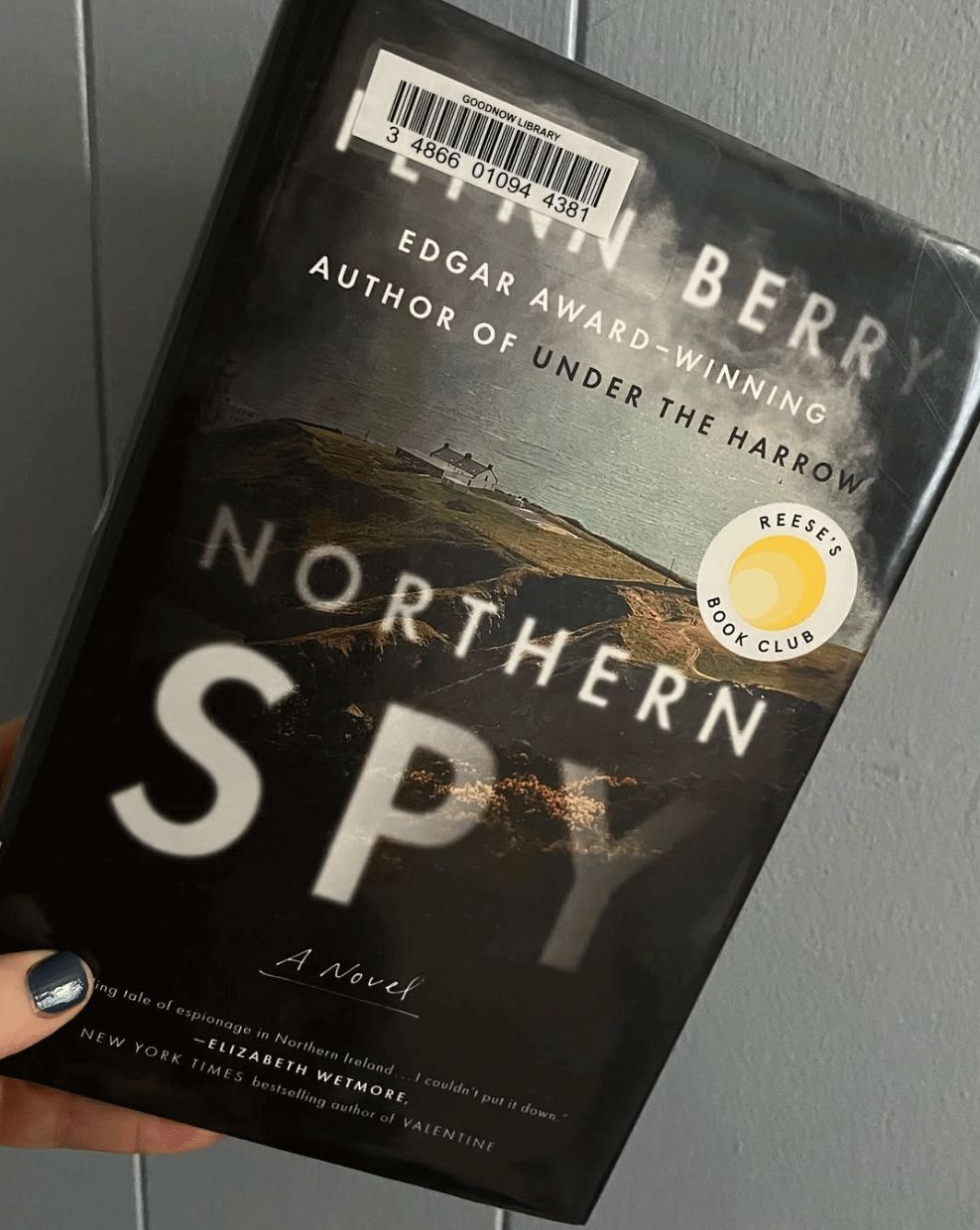
Northern Spy
Nope, I still don’t like “beach reads,” but I’ve decided I’ll take a good thriller any day for a “palate cleanser” type of book. This one — Northern Spy, by Flynn Berry — was recommended by @katrinschumann. And btw, I totally agree with her about the title and cover design: Nondescript. But Northern Spy is a great clip of a read and revolves around the IRA in contemporary Belfast. So set aside titling and design quibbles!

The Trees
The Trees by Percival Everett didn’t win the Booker this year — but it did make the short list. And not that I am a Booker judge and not that I even read every other finalist — but it was important and deserving that it was on that list. I can’t even begin to think of another book I’ve read quite like it.

Babbitt
Hey, I decided to mix things up and read something old! One hundred years old to be precise, as Sinclair Lewis’ Babbitt was published in 1922.

Desperate Characters
Scene from my couch…
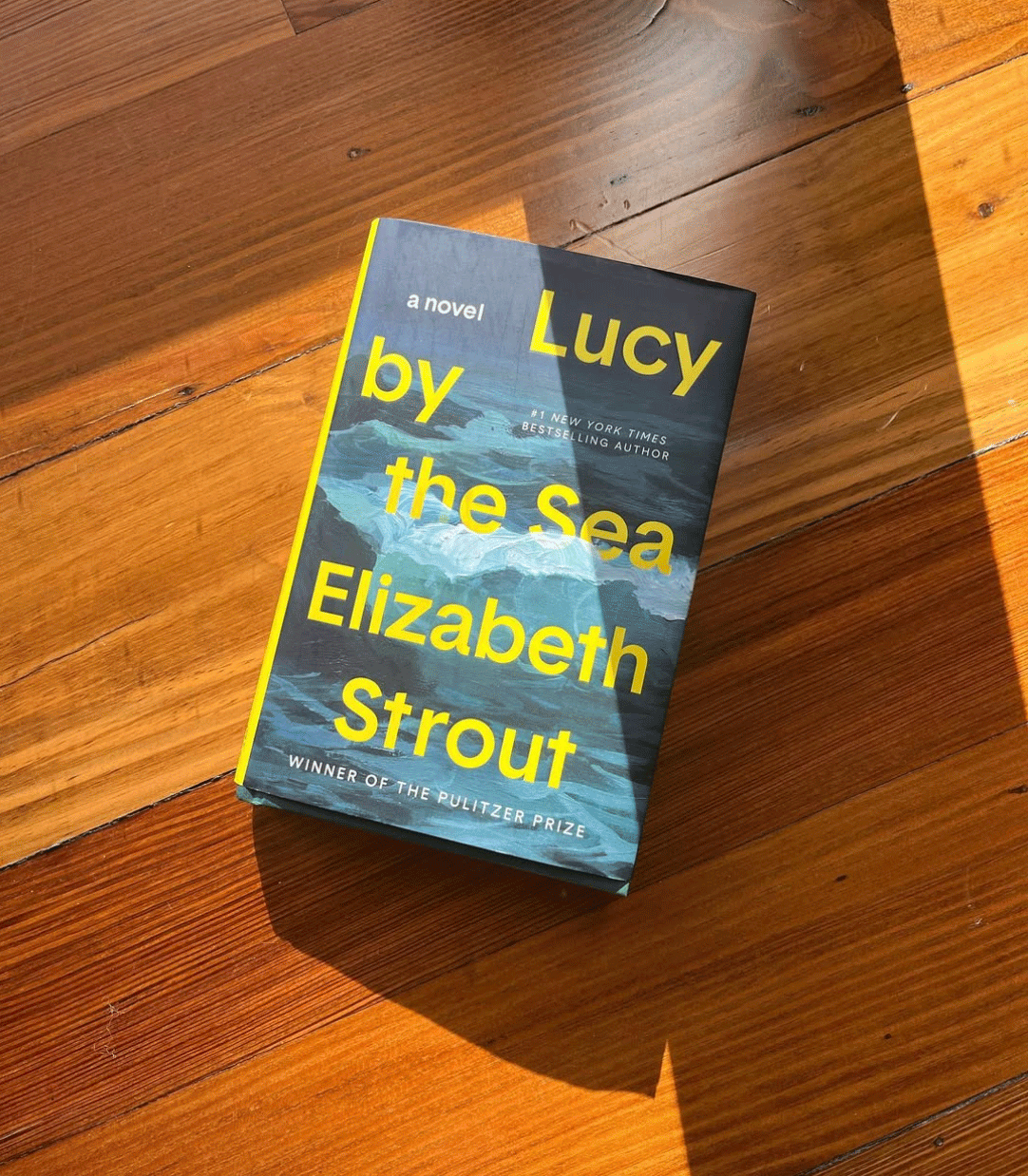
Lucy by the Sea
Just finished Lucy by the Sea…typical Elizabeth Strout, which means deceptively simple observations about life that are truthful and meaningful because they’re woven into glimpses of very complex characters who readers have grown to know and love. (Can you point me to any of her novels that feature characters who don’t pop up in others?)

The Colony
Gaelic (i.e. Irish) is a compulsory subject in Irish schools. While living in Ireland, I learned that debate always brewed as to its utility and role, but for my family, it was just something different and interesting. As outsiders, we had no weighty thoughts about Ireland’s identity, and as parents, we liked seeing our children learn something new. Matt has a colleague who grew up on Inisheer, which is part of the Gaeltacht (rural districts where Irish is the predominant language); when she speaks to her family, it’s in Irish. There is also a growth of Irish-speakers in urban areas due to the popularity of Gaelscoileanna, schools outside of the Gaeltacht that instruct all subjects in the Irish language. Our friends have sent their three girls to one for secondary and/or primary school. So there’s an overly simplistic primer on Gaelic…from a non-Irish person.
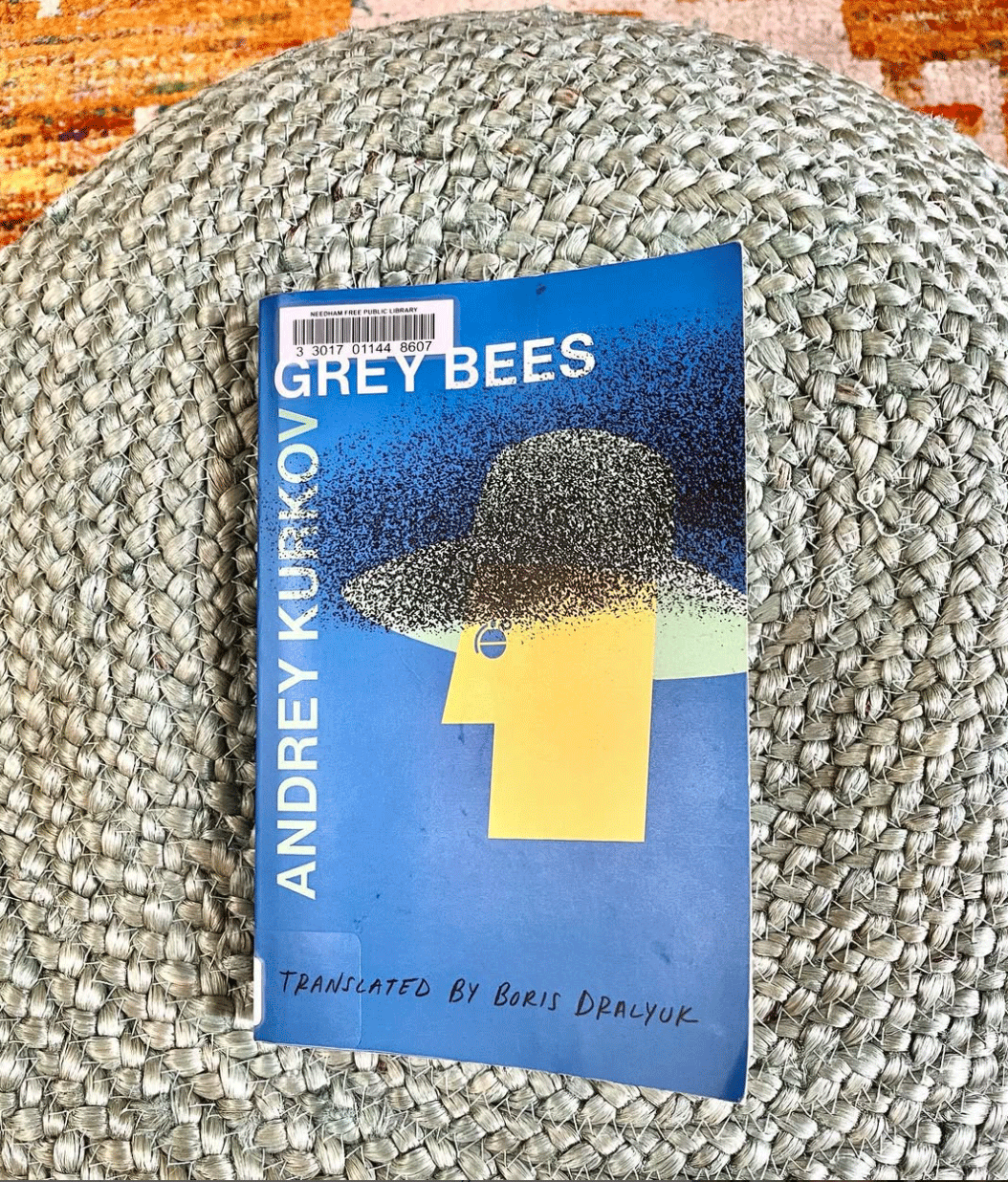
Grey Bees
I first learned about Grey Bees by the Ukranian writer Andrey Kurkov back in June. (You can check out my post from June 27, which was inspired by an interview with Kurkov, in which he said, “They think you cannot mix culture and politics. I said, maybe *you* cannot. I can!”)

Horse
Coming in strong in the #FictionIsRelevant game: Horse, by Geraldine Brooks.

In the Valley
Do I have a new author to place in my mental “Will Read Anything This Person Writes” file? Yes. It’s Ron Rash.

Booth
If I had to do a mash-up style quickie summary of Booth by Karen Joy Fowler, I’d say this novel about Lincoln assassin John Wilkes Booth and his famously theatrical family is part Hamnet (Maggie O’Farrell), part Shadowplay (Joseph O’Connor), part Lincoln in the Bardo (George Saunders). Stylistically, it reminded me most of Hamnet. (Plus it’s full of Shakespeare references). But Shadowplay is about Victorian theater and Lincoln in the Bardo is about President Lincoln’s grief for his son, so we’ve got points for thematic overlay there.
